


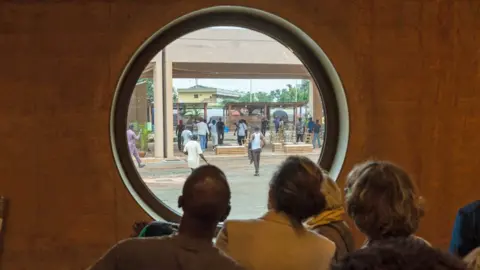
Nigeria's remarkable new Art Museum of West Africa (Mowaa) has landed in the crosshairs of local power politics during the week it was scheduled to – but did not manage – to begin operations to the general public for the initial occasion.
The Grand Vision
The 15-acre complex sits in the center of Benin City, main city of the southern area of Edo – and features an excavation site and facilities created by renowned dual heritage architect Sir David Adjaye, particularly noted for the National Museum of African American History and Culture that began operations in Washington DC in 2016.
It has been five years in the development – and is planned to showcase both the history and the modern times of artistic expression in the area renowned for the Benin Bronzes, historical pieces looted from the royal palace by British soldiers in the 1800s.
Setup and Prospects
It is notable – and ahead of the planned opening, Mowaa was energetic with staff committed to show it is a venue that can rival well-known museums and galleries in the West.
Internally conservators carefully revealed art pieces from protective packaging, checking each item and taking thorough records before placing them on display surfaces and plinths.
Experts fine-tuned temperature regulation systems. In the research lab, staff members calibrated instruments intended to maintain ancient items.
Funding and Economic Goals
The project has been the idea of businessman Phillip Ihenacho – now Mowaa's managing director.
"I want us to have a major economic benefit on communities in this region," he explained to media outlets, noting that he hoped to make the city "a tourism center."
Mowaa, a non-profit national foundation, envisions itself establishing over 30,000 employment opportunities and adding more than $80m each year to the regional creative economy through partnerships and activities.
Investment and Administrative Problems
It has needed $25m to reach this point – capital gathered from multiple donors, featuring the French and German governments, the British Museum and the Edo state government.
But currently the regional administration has revoked permission from under it – revoking the utilization of the land on which the facility was constructed.
An government communicator explained this was because in the initial documents it had identified as Edo Museum of West African Art – and it had subsequently dropped "Edo" from its designation.
Protests and Political Intervention
This statement followed protests on Sunday, when activists stormed the complex insisting it be named the Benin Royal Museum.
A disruptive group harassed overseas dignitaries at the venue prior to the opening – requiring them to be hurried away under official guard.
Head of state Bola Tinubu has also intervened to try and resolve the tensions, establishing a presidential committee to address the controversy.
Administrative Challenges
But why has this evolved into so controversial – and such a reputation problem?
Much of it results from internecine rivalries at a local state level, as it was the ex-administrator Godwin Obaseki – whose administration concluded the previous year – who was a key supporter of the project.
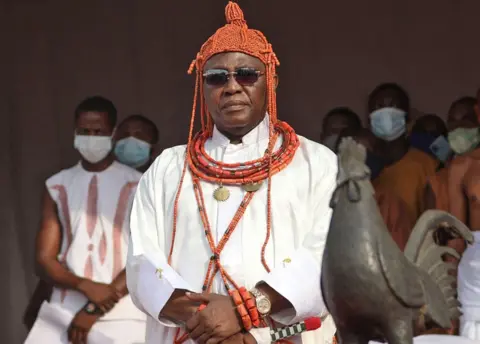
And it seems the leadership of the current leader, a strong supporter of the local traditional ruler, known as the Oba, may desire more of a stake in the venture. The protesters on the weekend, for case, were insisting that the museum be put under the control of the royal leader.
The Cultural Artifacts Debate
This emphasizes the controversial matter of the historical artworks, one of the region's most renowned historical legacy.
Because even if the facility does ultimately open, these objects will be noticeably missing.
They are metal, ivory and wooden carvings that once decorated the royal palace of the Benin Kingdom before British soldiers looted them in the colonial era during a colonial invasion.
Nowadays, thousands remain distributed across institutions in Western nations -- including the British Museum, German museum and the American museum.
Repatriation Campaigns
Their repatriation has become one of the most debated debates in the worldwide cultural sector. Roughly 150 have presently made their way home – and further are due to follow.
When plans for the institution in the city were initially revealed in recent years, the movers and shakers on the country's cultural sector expected it would become their natural home – a state-of-the-art complex to show them off to the international community.
But the issues became confused recently after the federal government announced that the traditional ruler would be the proper guardian of any returned bronzes – and the palace advocated for a museum under the king's authority, against the desires of the former governor.
Strategic Positioning
This placed Mowaa in a difficult situation: asserting a definite position on repatriation while remaining diplomatic on custodianship – and emphasising its wider mission, which led to|c


